January 7th, 2011 — 3:42pm

Yes I did say I was going to eat less meat in January but I had this on New Year’s Eve so ha! It’s allowed. We decided to stay in this year; basically I’ve had it with NYE, we’re through. Done. Kaput. What I mean to say is that I’m done with going out on NYE – there’s literally no worse way to start a fresh year than waking up in The World of Pain. I still managed to consume a fair amount of cava, but at least I didn’t pay silly money for each glass, or wake up on someone else’s floor after a house party with a crick in my neck and a stranger breathing stale boozy morning breath in my face.
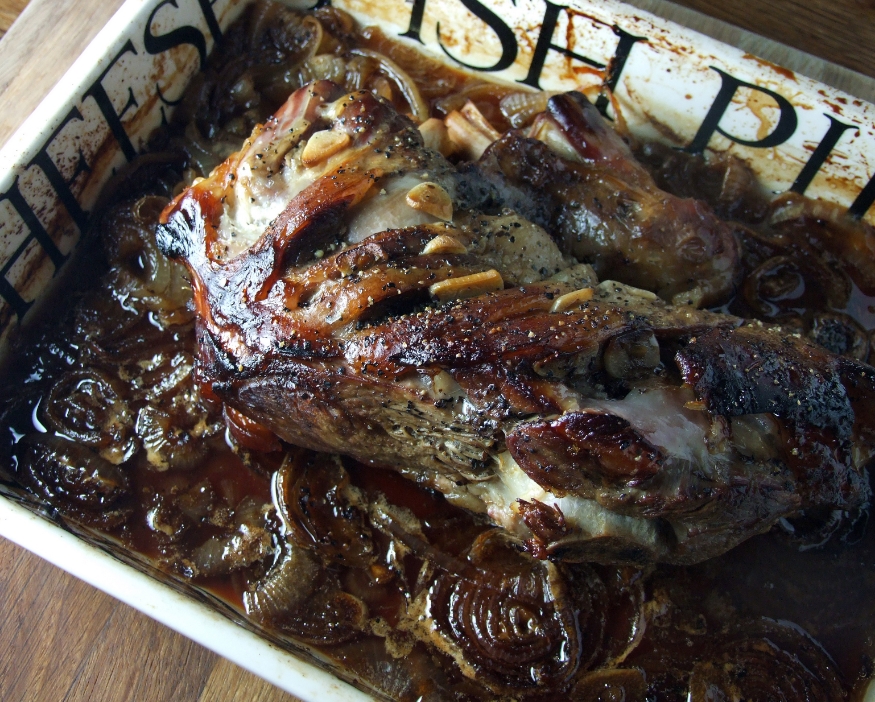
This year my boyfriend and I got steadily sozzled in our own home while this lamb shoulder roasted slowly until the meat was falling away from the bone. I found the recipe on Becky’s blog. Pom molasses has to be the perfect marinade for lamb, all sweet and sour; the edge bits get sticky and the onions and garlic break down into the gravy. It’s almost obscene, it’s so tasty.


We stuffed it into pitta breads with some very finely shredded cabbage and a salsa I made with tomatoes, onion and my mum’s incredible pickled chillies which are packed with coriander seeds. It was basically a really posh kebab and way better than anything I could have picked up around these parts as I staggered my way home after midnight.
Slow roast shoulder of lamb with pomegranate molasses (from Girl Interrupted Eating)
100ml pomegranate molasses
100ml water
3 large onions, thickly sliced
4 cloves garlic, finely sliced
Leave the lamb to marinade for a few hours in the pomegranate molasses. I made a few slits in the meat to allow the molasses to penetrate the meat and shoved a few slices of garlic into each slit.
Allow the meat to come up to room temperature before cooking. Preheat the oven to 150C.
Place the onions and garlic in the bottom of a large, oven proof lidded dish (or just cover your dish with foil, as I did). Place the lamb on top and pour over the pomegranate molasses, rubbing it into the lamb. Add the water, cover and place in the oven 3 hours for a 1kg joint (adding 20 minutes extra per 500g).
After this time, remove the lamb joint from the juices, pour the juices into a bowl and leave for half an hour to allow the fat to move to the top. Skim off the fat and discard it. Turn the oven up to 190C. Return the lamb and skimmed juice to the oven in a roasting tray. You can drizzle over some extra pomegranate molasses at this point. Cook for 30 minutes until the juices are bubbling and lamb is browned.
When cooked, pull the lamb apart and stuff into pitta breads, or whatever else you fancy. Make sure to get a good helping of that sticky sauce, too.
26 comments » | Barbecue, Main Dishes, Meat, Sandwiches
September 12th, 2010 — 4:29pm

The way to get good at cooking is to go at recipes over and over, not flit around from one place to another and never look back.
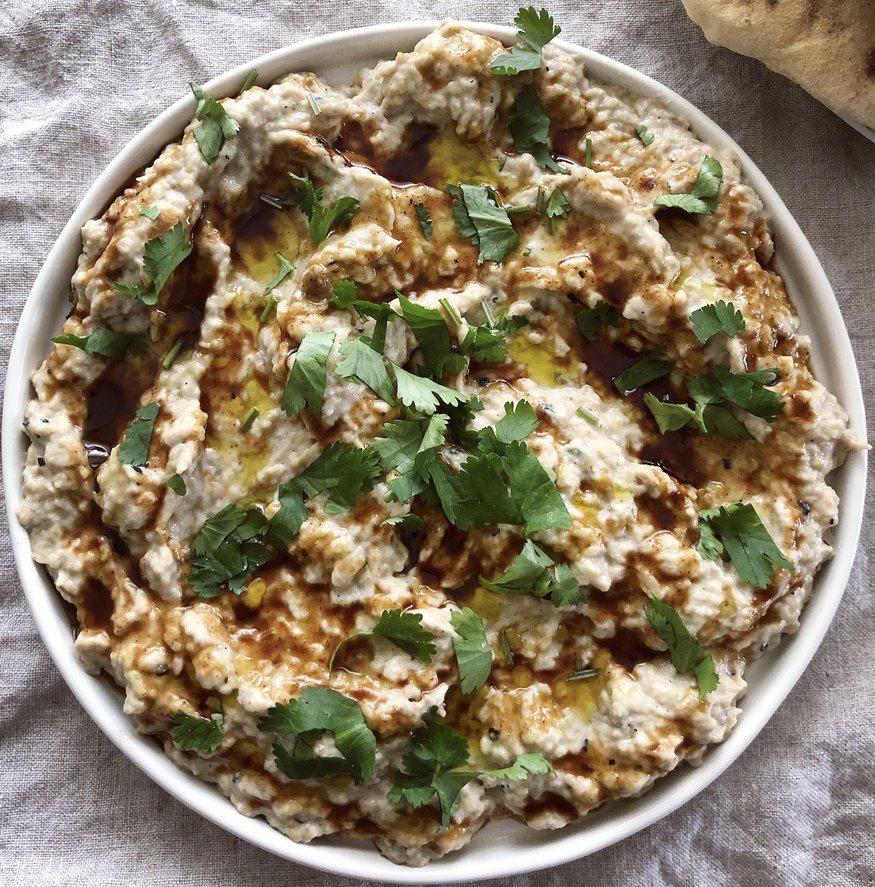
I ate a stunning baba ganoush at Maramia Cafe recently as part of a ‘lamb banquet’ organised by Carla. The meat was soft and tasty as hell, but the baba was what really blew people’s minds. It was thicker than mine; I wondered how they’d achieved the consistency and considered straining the yoghurt. I’m a serial strainer – you end up with something almost cream cheese-y but way more refreshing. I tried using it in the baba and the result was of course, richer. I’ve also started using smaller aubergines, which means that the smoke can penetrate all the flesh, rather than just the outer layer.
That’s it really – makes all the difference.
Baba Ganoush
8 small aubergines
2 cloves garlic, crushed
2 lemons (juice)
1 handful mint leaves, chopped
1 handful coriander or parsley leaves (or a little of both), chopped
6-8 tablespoons tahini (I like a good whack but you may want less)
1-2 tablespoons pomegranate molasses
Salt and pepper
4 tablespoons olive oil (not extra virgin)
4 tablespoons strained yoghurt (see below)
First, strain the yoghurt. If you don’t remember to do this the night before it doesn’t matter, even a couple of hours will make a big difference and the process itself takes seconds of preparation. Take a 500g tub of decent Greek-style yoghurt such as Total. Full-fat will obviously taste better than low fat but the latter does work okay. You’ll need some butter muslin, which is available from hardware stores easily. Cut a square of the muslin and line a bowl with it. Mix the yoghurt with a scant teaspoon of salt, mix well, then dollop it all into the middle of the muslin in the bowl. Gather it up, tie string around the top then tie the other end to something (I use a kitchen cupboard handle). Leave it for a few hours or ideally, overnight with the bowl underneath.

Pierce the aubergines with a fork and place directly on the gas rings of a hob (1 per ring) on a low flame, or put them under the grill, turning occasionally until blackened all over and collapsed. They will burst but this is fine, it just requires a bit of attention so you don’t lose the flesh. Remove to a plate and let cool slightly, then scrape the flesh from inside, leaving any bits of blackened skin and liquid on the plate behind.
Blend with all the other ingredients and season and adjust as necessary. You may want to add more lemon, yoghurt or salt for example.
Allow to sit for a few hours before serving with hot flat breads or pitta for scooping.
15 comments » | Barbecue, Food From The Rye, Healthy, Peckham, Sauces, Condiments and Spreads, Side Dishes, Snacks, Vegetables
March 30th, 2010 — 8:45pm

Aubergine is surely the most magical of all vegetables. Stacks of shiny purple orbs sit squat and full of promise everywhere down Rye Lane,* and a particularly good looking specimen will seduce me at least once a week. When I first started learning to cook, the aubergine was also my first big disappointment – I had no idea how to cook it and my inexperienced hand left the poor thing tough-skinned and slimy. Thank goodness I persevered. Just consider a life without fish fragrant aubergines or melanzane alla parmigiana.
‘Burning’ aubergine opens the door on a whole new world for fanatics; you dump it on the gas ring of the hob, turn it every so often and then find that the inside of your charred, collapsed, steaming black vegetable has transformed from white and woolly to smoky, creamed mush.

Ottolenghi mixes it with yoghurt, garlic, lemon and pomegranate molasses and who am I to argue? It’s perfect. I’ve eaten it with lunch for a week and not got bored. It also goes spectacularly well with this lamb.
The lamb works best if you really get in with your hands and massage the rack with those spices. Leave it overnight if you have time. Minted, pistachio studded cous cous cooked in stock makes excellent bedrock and the burnt aubergine sauce is cooling and sharp yet sweet, with that curious addictive quality that pomegranate molasses brings.
One of my favourite meals of the past few weeks.
Moroccan Spiced Lamb Rack with Burnt Aubergine Sauce
For the aubergine sauce, go here.
For the lamb
1 lamb rack, about 8 chops
1/4 tsp ground cumin
1/4 tsp ground coriander
1/4 tsp chilli powder
1/4 tsp turmeric
1/4 tsp dried mint
Pinch of ground cloves
1 clove crushed garlic
2 tbsps olive oil
Mix together all the spices, garlic, oil and a little salt and pepper. Rub this over the rack, really working it in and leave overnight in the fridge. Allow to come to room temperature before cooking.
To cook your rack, preheat your oven to 250C. Sear the lamb rack, fat side down for about 4 minutes then turn over for another few minutes. Put the rack in the oven for 10-15 minutes, depending on the size of your rack. Mine was only just cooked and I left it in for 15 minutes. Rest the rack for another 15 minutes and then carve into mini chops.
* My favourite shop on the whole stretch is Khan’s – post coming up.
21 comments » | Main Dishes, Meat, Vegetables