Category: Soups


Jamaican corn soup

August 30th, 2010 — 6:45pm

It’s the end of the summer and the corn is going cheap. I bought four cobs for a quid in Peckham yesterday and a frankly quite staggering twelve red peppers for the same. Twelve. Not joking.

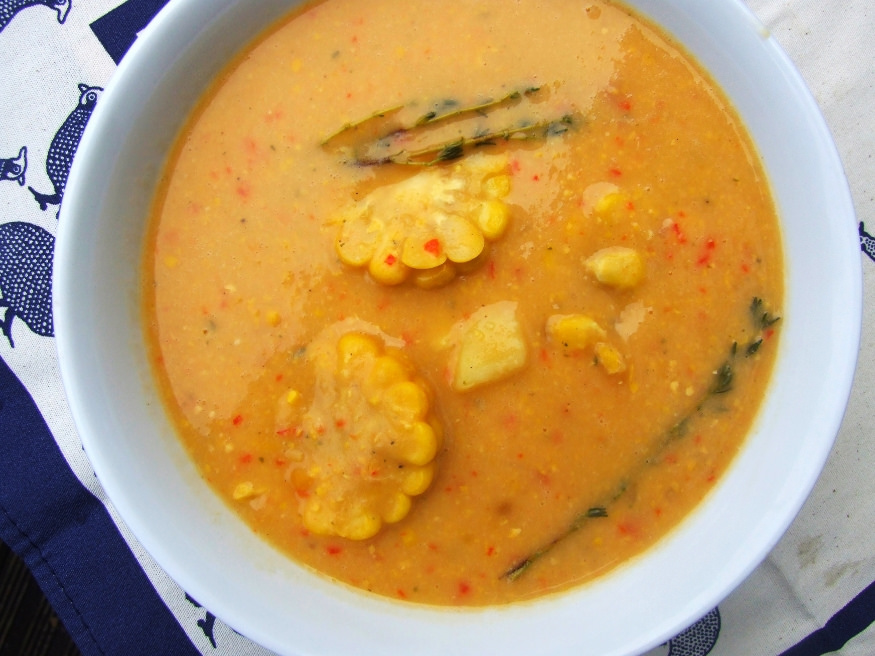
This soup only uses one you’ll be pleased to know, along with two cobs and some classic Caribbean flavours: thyme, scotch bonnet chilli and coconut. It’s a hearty mix, thickened with yellow split peas and potato but my version is light compared with other recipes which use pumpkin or squash and other vegetables. I prefer a fresher version which keeps the focus on the juicy bursts of corn. I strip one cob and slice the other so I’m not denied the pleasure of gnawing on it.

The scotch bonnet chilli is left whole and slit lengthways to release just moderate fruity heat and the creamy coconut milk smooths things over. It tastes tropical and most importantly, it celebrates the corn. At that price, it would be rude not to.

Jamaican Corn Soup

1 large onion, diced
2 cloves garlic, finely chopped
1 scotch bonnet chilli
150g yellow split peas
1 litre stock (I used vegetable)
400ml tin of coconut milk
2 sprigs of thyme
2 cobs corn
1 red pepper, diced
1 large potato, diced

Heat a couple of tablespoons of vegetable or groundnut oil in a pan and add the onion. Let it sweat over a lowish heat for about 8 minutes then add the garlic for a couple of minutes more, taking care not to let it burn. Make a cut down the length of the chilli, but keep it intact and add it to the pan with the split peas, thyme and stock – simmer for 30 minutes.

Prepare the corn by shaving the kernels from one of the cobs, running your knife down the sides, top to bottom. Slice the other one into 2cm thick slices (I nicked that idea from this recipe recently. I also nicked their presentation). Add the corn, coconut milk and potato and simmer for 10-15 minutes. Add the red pepper for the final 5 minutes. Season with salt and pepper.

Allow the soup to cool a little then remove the chilli, thyme and corn slices (reserve the corn slices) and blend half the soup. If it is still quite hot then make sure not to fill the blender more than half way and hold the lid down because if you don’t you will end up with soup all over your kitchen. It will blast the lid off the blender. Return to the pan and add back the corn slices. Reheat if necessary, adjust the seasoning and serve.

  • Share/Bookmark

12 comments » | Caribbean Food, Food From The Rye, Gluten-free, Soups, Starters, Vegetables

Mutton Paomo

August 26th, 2010 — 8:31pm

I came across this dish when I was looking for new ways to eat pickled garlic, which is something I’ve been doing a lot. What a condiment. Spiky yet sweet, it’s an unusual and addictive flavour. My friend Sally Butcher who owns the Iranian shop and deli, Persepolis tells me that in the Middle East, “they eat it with everything.” This makes sense to me.

On my internet travels I came across an apparently famous Chinese dish called the mutton or yangrou paomo; it’s from Xi’an, the result of cuisines converging via the Silk Road. Small pieces of unleavened ‘Muslim flat bread’ are an Arabian influence; the diner tears the bread into peanut-sized pieces and returns the bowl to the cook who tops it with mutton slices, spiced broth and often, glass noodles.* The dough pieces swell to form springy nuggets as they soak up the liquid. Common accompaniments are chilli paste, coriander leaves and most importantly, the pickled garlic. I was having me some of that.

The bread was a bit of a ball-ache. An e-mail exchange with Sunflower revealed that it’s usually a “heavy, griddled bun similar to an English muffin” but attempts to find a recipe failed. I considered substituting a muffin but it seemed the wrong way to approach a challenge. In the end I used the ingredients found scrawled on a piece of paper, apparently the results of a frantic searching session; I have no recollection. Cooked in a dry pan, it was dense enough to form the desired sticky dumplings rather than gummy mush.

Mostly you just need to chuck everything in a pot, but it will take a good three hours to cook, so one for the weekend. Other recipes cook broth and meat separately but I didn’t have time for that so I asked the butcher to cut up a leg of mutton and simmered the meat and bones together. Mighty black cardamom pods swelled like giant raisins on the broth, releasing their smoky, underground flavour. A lean over the pot made my nostrils buzz with chilli and star anise.

I’m pretty sure that this dish only partly resembles the real thing. I needed more broth in the bowl that’s for sure and usually the meat would be added separately before the hot stock is poured over. At least, that’s what I managed to glean from some rather dodgy translation. I do know however, that the dish is the most famous contribution of Xi’an to Chinese cuisine and apparently, served nearly everywhere in the city and also as part of the state banquet. I think it’s fair to say they are proud of it. If I’ve made it wrong or done it a disservice then I apologise but in my defence, it tasted great.

Mutton Paomo (Yangrou Paomo)

1kg of mutton (mostly chunks of meat and a few large pieces of bone)
2 onions, roughly chopped
4 cloves of garlic, crushed
1 x 2 inch piece of ginger, finely grated
1 mild red chilli, slit lengthways or chopped (I slit mine as I wanted to add chilli paste as a garnish)
200g glass noodles*
2.5 teaspoons of salt
8 peppercorns
2 star anise
A few pieces of cassia bark
3 black cardamom pods, crushed with the side of a knife
2 tablespoons cooking wine

Pickled garlic (available from Persepolis and Khan’s if you live in Peckham), plus chilli paste and coriander leaves to garnish

Trim your meat of any large pieces of fat. Put your meat, bones and everything else apart from the noodles and garnish into a large stock pot. If you want to get fancy, you could bundle your spices into a piece of muslin to make them easier to remove later on. Cover with water (mine took about 3 litres) and bring to the boil. Turn down to a simmer and allow to cook, uncovered for about 3 hours. After this time, remove the bones, whole spices and any remaining pieces of visible fat. I now allowed the broth to cool and skimmed the excess fat from the top. There is already enough fat in the broth to give a good flavour.

Cook the noodles according to packet instructions.

To serve, re-heat and spoon over peanut sized pieces of the bread (recipe below). Add a serving of noodles to the bowl and garnish as desired with the chilli, coriander and pickled garlic.

For the bread

300g plain (all purpose) flour
1 teaspoon salt
200ml boiling water
1 tablespoon lard, softened (by softened I mean leave it out until completely soft)

Mix all the ingredients together until you have a smooth dough. Let it rest for a little while before rolling it out into 8 pieces, about 4-5 inches in diameter. Wipe a heavy skillet or tava with oil and cook each bread for 5 minutes or so on each side until lightly golden. To serve, tear into small pieces and spoon the broth and condiments on top.

* As you can see, I only had wheat noodles.

  • Share/Bookmark

8 comments » | Bread, Main Dishes, Meat, Noodles, Pickles, Soups, Stews, Street Food

Two Garlic Soup

May 2nd, 2010 — 1:14pm

I actually can’t stop eating outrageous amounts of garlic. One or two cloves is no longer an acceptable amount. The obsession gently rumbles on. In contrast, I like to think that my immune system is racing ahead, building lymphocytes faster than you can say ‘flu’. In reality, rather than glowing with shiny health I’m sure I just gently whiff of garlic. Constantly.

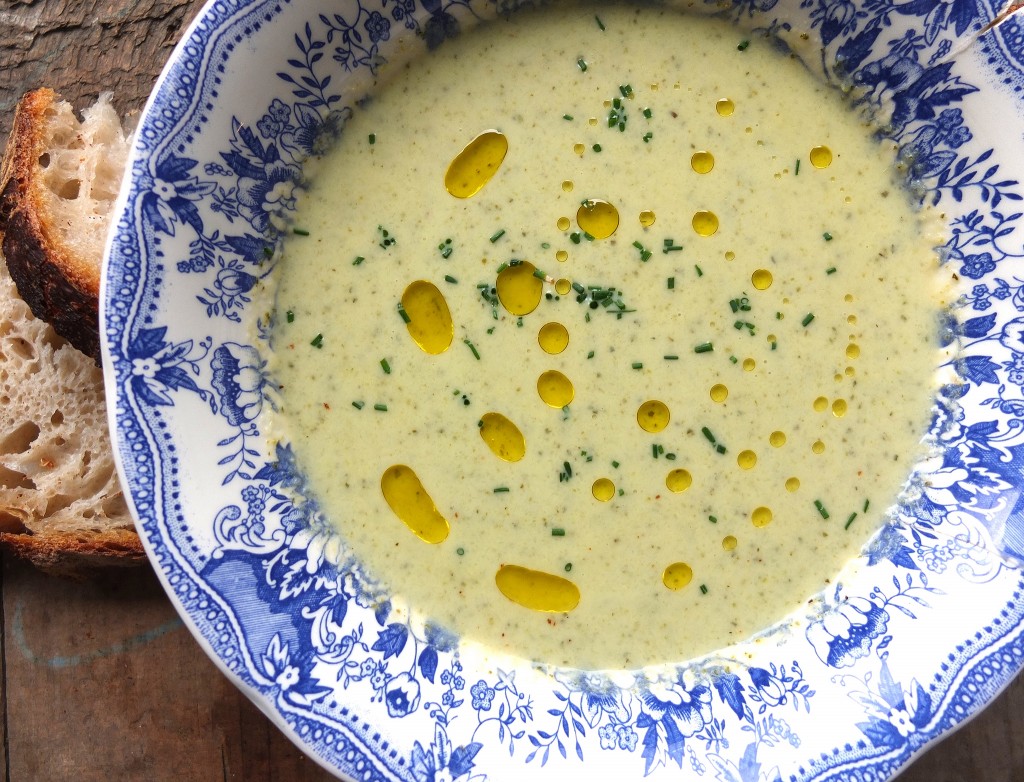
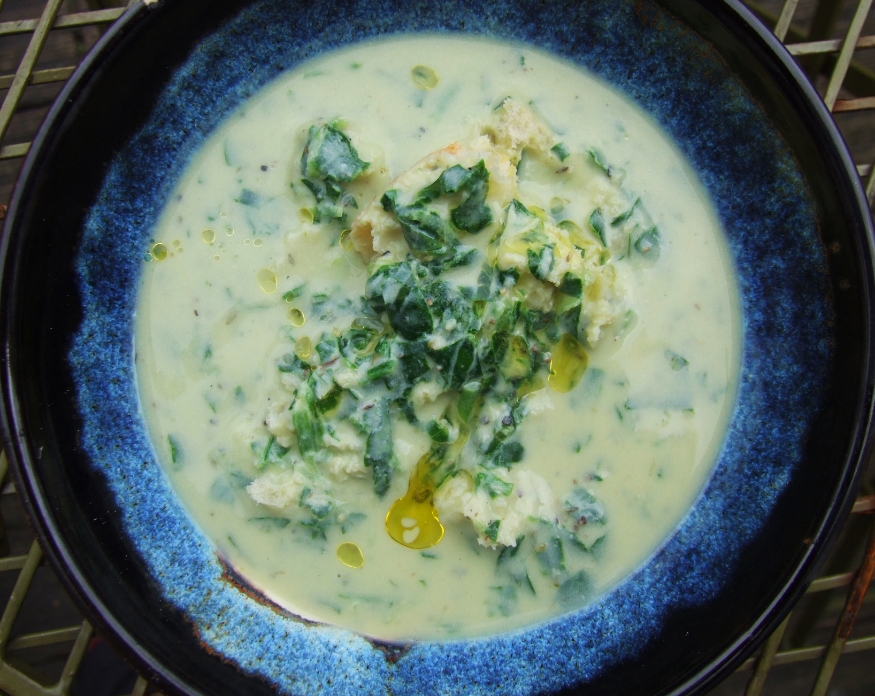
Gorgeous little soup though, even if it is rather rich. I based it on this one but reduced the amount of regular cloves, omitted the sage and added a small handful of the wild garlic I picked at Riverford Farm. The soup is interesting because it goes from looking like hot dishwater with a few pearly cloves bobbing on the bubbles to a creamy, velveteen elixir; pretty amazing considering it doesn’t contain even the merest smidgen of cream. It is instead enriched with the rather wanky sounding ‘binding pomade’ – a combination of eggs, Parmesan and olive oil. You slowly whisk the oil into the cheese and amber yolks, then a ladleful of the broth into the ‘pomade’ and then the whole lot back into the broth. It’s really rather a calming and leisurely process. I used the time to reflect on important issues such as where I might have left the key for the bin room, whether it was too early to open a beer or not and when I might find time to make Ottolenghi’s caramelised garlic tart. Actually that last one really is important.

The original recipe suggests pouring the finished soup over day-old pieces of baguette, which I did, but found the combination of rich soup and soggy bread paste rather unpleasant. Really unpleasant, actually. Like eating a piece of sodden bog roll. The second helping was much more enjoyable with a bit of traditional dunking and of course, the terminal wiping of bowl.

It is extremely garlicky but deeply savoury; the wild garlic brings its sprightly green bite. I would advise you to use good Parmesan, as it makes all the difference and a nice grassy olive oil that isn’t too strong. The finished thing is really rather pretty and spring-like I think, with a cheeky richness that makes a stealthy approach, soothing and satisfying with every mouthful.

Two Garlic Soup (adapted from this recipe)

950ml water
1 bay leaf
1 teaspoon fresh thyme
6 cloves of garlic, chopped
1 teaspoon salt

For binding

1 egg
2 egg yolks
40g parmesan
Pepper (white might be nice actually)
50ml olive oil

Bring the water to a boil in a pan and add the thyme, bay leaf, garlic cloves and salt. Bring to the boil then turn down and simmer for 40 minutes. Strain into a bowl, then remove and discard the bay leaf and return the garlic and the infused water back to the pan but off the heat. Taste and add more salt if you like but remember the Parmesan is coming later.

Whisk the egg, the yolks, Parmesan and pepper together until creamy. Slowly drizzle in the olive oil, whisking constantly, as if you were making mayonnaise. Then, take a ladleful of the broth and do the same, whisking it really slowly into the oil mixture. Now tip the whole thing into the remaining broth in the pan and set over a low to medium heat, stirring all the time until it starts to thicken. Heidi mentions in her recipe that the creator of the original recipe, Richard Olney, says that it should be cooked, “just long enough to be no longer watery” but I agree with her that it is nicer when it’s a bit thicker.

Serve over bread or not – up to you. I prefer it not. I drizzled a bit more oil and grated a little extra cheese on top.

Other garlicky goodness:

Chicken with 40 cloves of garlic
Garlic Curry

  • Share/Bookmark

19 comments » | Soups

Leberknoedelsuppe

January 31st, 2010 — 6:16pm

Austrian liver dumpling soup. I’ll admit, it doesn’t sound particularly appetising but then neither did a sausage containing cheese, and that turned out to be a delicious component of my ‘hot sausage meal’ at Kipferl Austrian deli in Farringdon. This tiny space accommodates just six tables and several shelves of Austrian wines, bread and countless unfamiliar jars and bottles. You can also buy liver dumplings.

When we arrived for lunch at 12.30pm two of the tables were already reserved and we were lucky that one ‘very regular’ customer was just leaving.

Kipferl serves Viennese breakfast, cakes, cold platters, filled rolls, soups, salads and of course, those ‘hot sausage meals’ which sounded like just the ticket for a rainy January Monday. I hastily ordered the ‘Kipferl special’ with käsekrainer, then caught sight of the sausage with sauerkraut and pickles – a meal that sounds like it was made specially for me – and promptly started sulking.

The owner asked us what kind of sausage we would like. Er… He explained that a weiner would be your standard Austrian wurst (like a Frankfurter), the debreziner spicy and the käsekrainer – a sausage with cheese. CHEESE. It sounded odd, which of course meant that I had to  have it.

It was surprisingly good. Tiny chunks of silky mellow cheese melt as the sausage is heated, creating an uncommonly juicy banger with a milky luxuriance that could easily be sickly if it wasn’t so well balanced. I particularly enjoyed the tight, crisp casing of the käsekrainer, which was so tense that every cut made me lean back slightly for fear of receiving a burst of molten pork fat to the eye. The accompanying salads were, I was relieved to find, lightly soused. This eased my regret at not ordering the sauerkraut and pickles and counteracted the succulent sausage perfectly; meaty lentils, soft potatoes and fresh, dill feathered cucumbers. A slice of rye and a dollop of  mustard were both very welcome guests at the party; the bread enabling a little light sandwich making and the mustard offering a placid, sweet tang.

The liver dumpling soup turned out well too. All you do (according to Kipferl’s owner – oh how I wish I’d asked his name), is plop the dumplings into simmering vegetable stock before garnishing with chives. One dumpling per person or two if you are very hungry. Of course, I did two. The stock I made heavy on the alliums, what with onions and liver being such happy partners. The dumplings taste a lot like faggots but with a slightly finer texture; since a primary ingredient of faggots is pig’s liver, this is hardly surprising.

I could really get into Austrian food. Firstly, they love pork. I think we all know where I stand on that one. Secondly, they love pickles and well, do I really need to repeat the story about me eating so many pickles as a child that my lips would turn white? I’ve not managed to achieve that as an adult but believe me, it’s not for lack of trying.

I highly recommend seeking out Kipferl if you are in the area, but do consider reserving a table. The website also advises that ‘good things take time’ and so if you are in a hurry, they advise calling ahead so that they can have your order ready when you get there.

Kipferl
70 Long Lane
London
EC1A 9EJ
020 7796 2229
www.kipferl.co.uk

Kipferl on Urbanspoon

Leberknoedelsuppe

First make a vegetable stock using two onions, 1 leek (split in half and well rinsed), several cloves of garlic, 2 carrots, 2 sticks of celery, 2 bay leaves, 10 peppercorns, some parsley stalks and any other veg trimmings you have lying around. Add some salt. Cover with water and simmer for about 45 minutes. Strain through a sieve then adjust the seasoning. (Gently frying the vegetables first in a little oil helps to increase depth of flavour but I forgot this time).

Return the stock to the pan before adding two liver dumplings per person. Simmer gently for twenty minutes. Ladle into bowls and garnish with chopped chives.

  • Share/Bookmark

17 comments » | Meat, Offal, Soups

Food From The Rye: Callaloo

December 20th, 2009 — 5:45pm

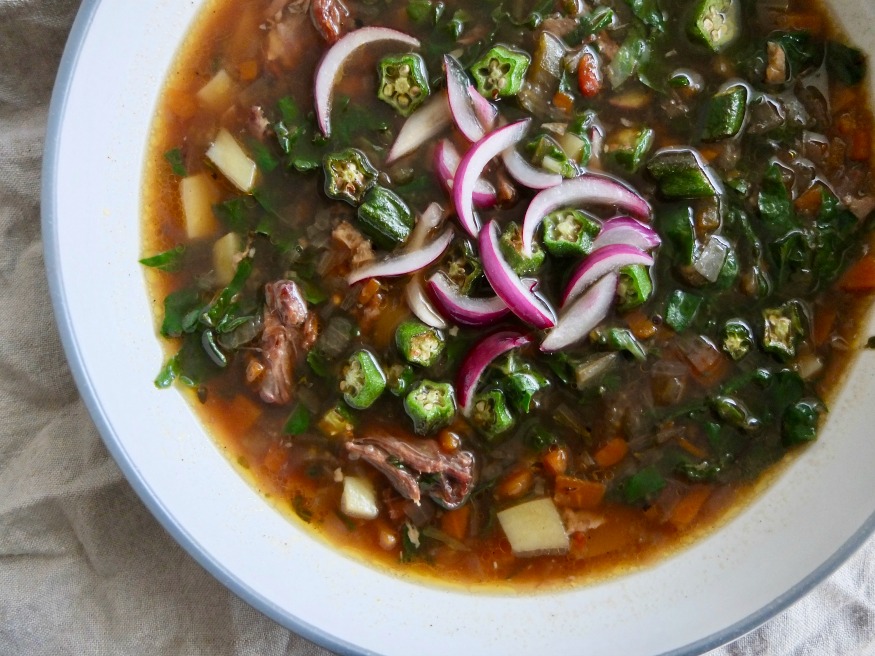
I was worried that me and callaloo were doomed from the start. The soup always seems to contain a healthy amount of okra and I had a problem with this for two reasons: firstly, those hairy little fingers irritate the hell out of my (thankfully not so hairy) little fingers, bringing me out in a rash, and secondly, most callaloo recipes called for them to simmer in the liquid for at least half an hour. This to me says one thing and one thing only: slime. Eating overcooked okra is like eating a fat slimy bogey; a big glutinous bowl of snot soup. Yum. Can’t wait.

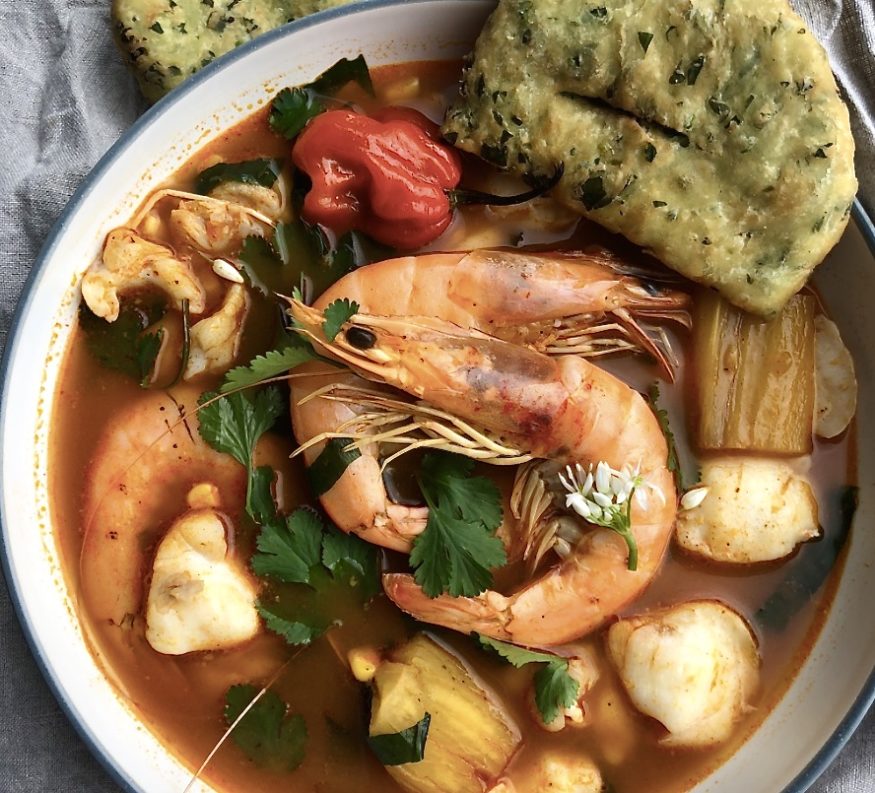
After a bit of mental wrestling I came to the conclusion that omitting them entirely was not acceptable and so I fried the sappy slices until they were sappy no more, sealed instead by a crispy outer crust. They were added back at the last minute. Other than these (literally) irritating beasties, the soup contains pork, prawns, scotch bonnet chilli, thyme, two types of onion and of course, the callaloo. I think it’s safe to say there’s a lot going on.

The flavour of the callaloo, which I bought tinned, is described somewhere on the great interwebz as, ‘a cross between spinach and cabbage’. That is exactly what it tastes like. Perhaps there’s a bit of asparagus in there as well. You get the idea. This predominantly ‘green’ flavour, makes for a very vegetal soup. At first. Then comes pork and then, even-better-joy-of-joys, pork fat; melty pieces cling to each pink nugget with a seductive wobble. There is the odd surprise of shrimp but it’s not unpleasant.

At first I find the soup musty but as the spoonfuls pass this transforms into an intriguing peppery complexity. The coconut milk is not really discernible as its usual overwhelming self but instead sort of lingers around keeping things in order. The okra keep themselves to themselves.

There’s no getting away from it – this is some seriously hearty fare and I’m amazed that it is usually served as a side dish, to act as a sort of gravy for other foods. Most of my Rye Lane dishes have been similar in weight and intensity. They are the kind of dishes that stick to your ribs; fortify, bolster and sustain.

That said, this soup also has an aromatic quality from the little love triangle going on between chilli, coconut and thyme; a surprising delicacy underneath it all really. But then that was the problem right there: so much in the mix, so many flavours and contrasts that all got a little bit muddy and confused. I really should have started with a simple version (no meat or fish) like the family recipe sent to me by a friend and blogger yesterday.

Although I enjoyed the taste of the callaloo vegetable itself, I’m not sure I’ll be cooking with it that often. A green leafy vegetable from a tin is not really any contender for fresh spinach, kale or chard for example. Well, my version isn’t anyway. I basically made a fundamental schoolgirl error by choosing to make the nitrous oxide, big-bore, super-charged version when I should have started off with the understated yet reliable runner. You live and learn.

Callaloo

325g callaloo (drained weight)
1 small white onion, finely chopped
1 tablespoon thyme leaves
3 spring onions, white and green parts, chopped
125g thick bacon cubes
225g small prawns
150ml coconut milk
200g okra, sliced
1 small scotch bonnet chilli, de-seeded and chopped
Stock – about 1 litre (I used vegetable)

Begin by frying the okra in a little oil until soft but crispy on the outside. Set aside on kitchen paper to soak up any oil. In a large pan, soften the onions and chilli gently for a few minutes before adding the callaloo, bacon, thyme and stock. Bring to the boil and then simmer for about 30 minutes before adding the prawns, okra and coconut milk for a further 2 or 3 minutes. Check the seasoning and serve.

  • Share/Bookmark

15 comments » | Caribbean Food, Fish, Food From The Rye, Main Dishes, Meat, Peckham, Side Dishes, Soups, Stews, Vegetables

Back to top