Category: Meat


Suya: Nigerian BBQ

May 29th, 2013 — 9:38am

Suya started to occupy my thoughts a few years ago when I noticed a takeaway place in Peckham: Obalende Suya Express on the high street. To say the place looks ramshackle is putting it mildly – the sign is caked in pigeon shit and interior design consists of a few stick-legged metal chairs with  scraps of fabric hanging off them. Obviously I went in, and I caught them on a good day; the suya was tender, smoky and like nothing I’d tasted before. Sadly the quality isn’t consistent. Boo. Thoughts turned to making my own.

A colleague of mine regularly travels to Nigeria and once, very kindly, she brought me back a package of suya spice. It came wrapped in someone’s bank statement. I tried it out at a friend’s BBQ but the results were a bit weird; the meat released a musty fug that smelled like Peckham down wind on a bad day. Rotting yams with a hint of fish and the dusty corners of an African back alley. That was several years ago, but recently I decided to have another crack at it.

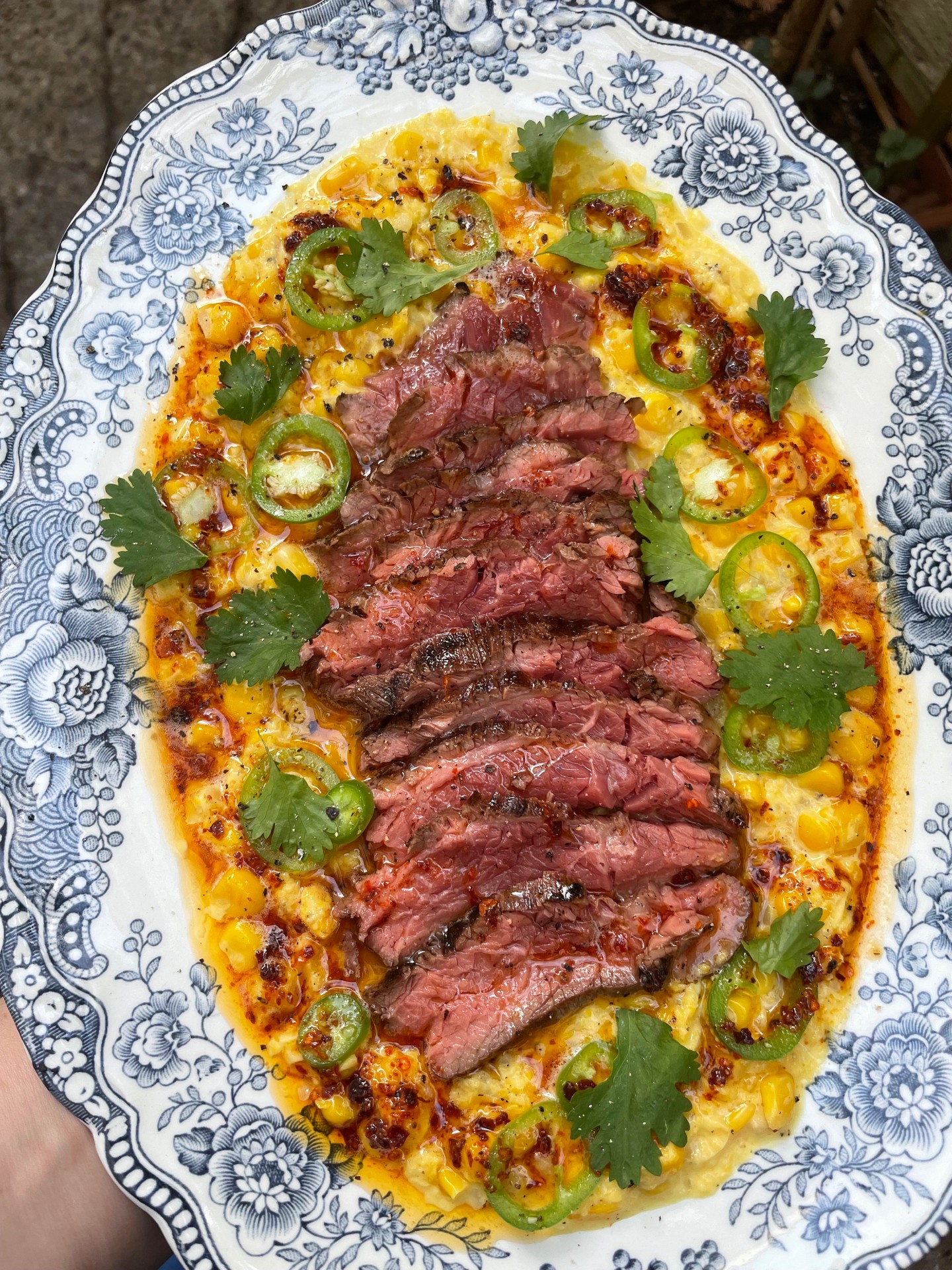
Basically suya is either sliced beef, chicken or fish, rubbed in a mixture of (crucially) ground peanuts and a mixture of flavourings including paprika, onion powder and ginger, amongst others. This is called tankora. The meat is threaded onto skewers and cooked and as far as I can tell, the smoke flavour is essential. It is served with a pile of tankora at the side plus some sliced onions and tomatoes.

Cracking the BBQ out again this weekend seemed like a balls out banger opportunity to salve some psychological wounds and get back down with the suya. Obviously there’s no point doing things by halves so we decided upon a suya three way cook off: a home made version, vs. the scary Nigerian must-in-a-jar vs. a packet of ready made mix picked up on Rye Lane.

Suya spice from Nigeria…mild but musty 

The Peckham blend…spicy 

Home made version mixed with the peanuts

Making your own tankora is basically a case of grinding up the nuts but stopping before they become peanut butter, then mixing with the other flavours and smearing onto the meat. We did this right before cooking which worked very well; the meat is sliced so thinly that to marinate it seems less necessary.

Really tasty sirloin from Flock and Herd in Peckham 

Skewered

Three way taste off

As we were grinding up the nuts to make the home made marinade it occurred to me what had gone wrong with my first attempt – the spice mixes are sold to be mixed with peanuts, not used neat. No wonder it was a little *cough* intense. It turns out that the home made version was the most vibrant, as you would expect. Handy really, considering not everyone can get bank statement wrapped packages from Nigeria, or nip down to the local African shop.

It’s hot, this recipe, humming with chilli and ginger. The ground nuts add buttery textural intensity, which made the gloriously tender sirloin seem even more so. In short, it was bloody tasty. A new BBQ favourite.

Suya 

600g sirloin steak, cut into slices about a cm thick (get the butcher to do this as it can be a bit tricky)
50g peanuts (salted is fine, just don’t add any extra salt to the mixture)
1 teaspoon chilli (grind up whatever you have, or use chilli powder)
1 teaspoon paprika
1/2 teaspoon ground ginger
1/2 teaspoon garlic powder
1 teaspoon onion powder OR you can be a fly beeatch like me and use 1 teaspoon ground up crispy fried onions from a bag

Grind up the peanuts in a spice grinder or blender. Stop before they become peanut butter. Add all the other spices and smother with the paste. Grill over the direct heat on a BBQ, leaving the inside slightly pink. Serve with a pile of the spice mixture if you like, and some sliced tomatoes and onions.

14 comments » | African food, Barbecue, Meat

Lamb and Date Meatballs in Frazzled Aubergine Sauce – Win a £50 Le Creuset Voucher

May 13th, 2013 — 1:33pm

[Edit] I WON! Thanks so much to everyone who voted. 

‘Frazzled’ aubergines? Okay, so I’m definitely not talking about aubergines cooked alongside the popular, bacon rasher-shaped potato snacks.

I sense your relief.

The idea of ‘burnt’ aubergines may be more familiar; popularised recently by chefs like Ottolenghi, it’s actually an age-old cooking technique. I prefer to call them frazzled. It’s just…well, it’s just a lovely word.

Shiny purple fruits are placed over a naked flame, roasted or grilled until skins blacken and they collapse inward on themselves with a steamy sigh. Once cooled and split, the inside is silken, and above all gloriously smoky; a total transformation. It is this creamy flesh that blends into magical dips such as baba ghanoush, but I like to use it as a base for a sauce. It seems very decadent somehow; almost fit for a feast.

The meatballs bobbing within are made with lamb, sweet nubs of date and warming cumin and chilli. I’ve nicked a trick from the Italians too and mixed in some breadcrumbs soaked in milk – just a little – the difference in texture is astounding. They become light and – dangerously – extremely easy to eat. A swirl of yoghurt and a few jewels of pomegranate make this dish really rather pretty. Serve with cous cous or bread to absorb the luxurious sauce.

I came up with this recipe as for the Le Creuset ‘Cast Iron Challenge’, so if you think this sounds a bit tasty, please vote for my recipe on twitter (using ‘I’m voting for @FoodStories in the (@McArthurGlenUK #LeCreuset #CastIronChallenge http://goo.gl/EM7fD), and you could win a Le Creuset voucher worth £50!! That’s pretty awesome.

Lamb and Date Meatballs in Frazzled Aubergine Sauce

500g minced lamb
4 dates, pitted and finely chopped
1 heaped teaspoon cumin seeds
1 teaspoon coriander seeds
1 heaped teaspoon hot chilli flakes, or to taste
1 teaspoon dried mint
1 thick slice white bread
Milk (about 4 tablespoons)

For the sauce

4 aubergines
1 large onion, finely chopped
2 cloves garlic, crushed
1/2 400g regular tin chopped tomatoes
2 black cardamom
1 tablespoon pomegranate molasses
1 cinnamon stick
300ml vegetable stock

Vegetable oil, for frying

Pierce the aubergines in several places with a fork, then place directly on the gas ring of the hob, turning occasionally, until black and shrivelled all over. Alternatively, grill them to the same effect.

Remove the crusts from the slice of bread and break into rough pieces. Place in a small bowl with enough milk to mash to a paste.

In a small frying pan, toast the cumin and coriander seeds over a low heat, stirring frequently, until they start to smell fragrant. Take care not to burn them. Grind them in a spice grinder or crush them in a pestle and mortar.

In a large bowl combine the minced lamb, ground cumin and coriander, chilli flakes, chopped dates and mint. Season with salt and pepper. Mix well; really , really well. Get in there with your hands and knead the mixture almost like a bread dough. Make sure the dates are well distributed. Roll into walnut sized balls. Set aside on a plate.

Heat 2 tablespoons of vegetable oil in the Le Creuset, and fry the meatballs in batches, 4 or 5 at a time, until golden brown all over. Set each batch aside while you cook the next.

To make the sauce, scrape the flesh from inside the aubergines, leaving behind the blackened skin. Chop roughly. Fry the onion until , cardamom pods and cinnamon stick until the onions are soft and beginning to colour. Scrape up the lovely meaty residues from the pan as you do this. Add the aubergines and garlic. Turn up the heat a little and Cook for about five minutes more stirring.

Add the tomatoes, pomegranate molasses and stock. Put lid on and cook for 45 mins to an hour on low heat. Taste and season. For a thicker sauce, remove the lid towards the end of cooking time to reduce it.

Scatter with pomegranate seeds and coriander to serve.

21 comments » | Competitions, Main Dishes, Meat

Cold Roast Lamb with Anchovy Sauce

May 9th, 2013 — 1:37pm

Leftovers are, for me, almost always better than the original dish. Even as a child I always wanted everything cold; steak and kidney pie being my favourite. I remember the highlight of holidays away with a friend’s family being these pre-packed, jellied treats, an anti-dote to the PURE EVIL that we were given to drink (that’s hot Ribena for those who don’t know). Again, I preferred that cold.

This is a rip off of a Simon Hopkinson recipe for cold veal with anchovy sauce and sliced boiled eggs. The salty anchovies work just as well with cold lamb as they do when jimmied into crevices with garlic and rosemary and roasted in a hot oven. Instead of melting away however, here they retain their flavour which, for me at least, is a very good thing.

Cold Roast Lamb with Anchovy Sauce

For the sauce (makes enough sauce for 4 people) 

6 tablespoons mayonnaise
8 anchovy fillets
1 tablespoon wholegrain mustard
1 teaspoon white wine vinegar
Splash of water

Plus the rest…

Sliced cold roast lamb
Lettuce leaves
Finely shredded spring onions
Capers, rinsed

Lay the lettuce leaves on a plate and sprinkle with some finely shredded spring onions. Lay the sliced lamb on top.

Put all the sauce ingredients in a small blender and whizz them up. Taste and adjust the quantities, you may want a little more white wine vinegar for example. Drizzle the sauce over the lamb and dot with capers.

11 comments » | Meat, Salads

Afghan Zamarud and Aubergine Pickle

April 24th, 2013 — 9:29am

Over the years I have become very interested in the food of Iran, then Georgia, and now Afghanistan. The cuisines all make use of ingredients I am very fond of, such as yoghurt, meats like lamb, fruits such as dates and pomegranate, vegetables such as spinach.

A browse around the bookshelves of Iranian shop/deli Persepolis recently turned up Noshe Djan, an Afghan cook book by a woman called Helen Saberi. Helen has written a cook book of the kind I have increasingly come to love; she married an Afghan man and spent a significant amount of time living in Afghanistan absorbing the culture and cooking the food. She has lived the life of an Afghan and she provides a heartwarming introduction to the Afghani meal time; the book is the kind one can read like a novel. It is genuine, accessible and utterly fascinating.

The first recipe I’ve cooked is the amusingly titled ‘sabzi pilau’ or ‘zamarud’, meaning emerald. I say amusing as every recipe like this, which suggests the main ingredient is a vegetable (in this case spinach), then goes on to specify ’700g of lamb’ or, often, chicken.

It was bloody delicious, although it did take a few hours to cook. Worth waiting for, but anyone who is making this might want to consider doing it on a weekend. Or perhaps you’re smart enough to just read the recipe properly in the first place, unlike me. We ate at 12.30 am.

The spice mix makes this interesting – char masala. It is equal parts cinnamon, cloves, cumin and black cardamom. In other spice mixes the stronger flavours like cloves are generally used in smaller quantities, but not here. I also loved the liberal use of black cardamom which I don’t often see; one of my favourite spices, like giant smoky black raisins.

The final pilau was comforting, with the feel of a biryani. I served it with garlic yoghurt (made by blanching some peeled garlic cloves then mixing with lightly whipped, seasoned yoghurt) and an aubergine pickle, which is also worth mentioning.

Small aubergines are slit, and then a whole garlic clove placed in each one; when pinched together they look like mussels. The pickling liquid is simple – white vinegar, sugar and green chillies, nigella seeds and fenugreek, the flavour of the latter being particularly suited to aubergines. It has a sort of intriguing musty flavour which contrasts the acidity. The pickled green chillies are obviously a mega bonus too.

Afghan Zamarud (from Noshe Djan by Helen Saberi)

This recipe serves 4, although if you have other dishes too it could easily serve 6-8. I’d recommend eating it with yoghurt on the side. The lamb can be substituted for a whole chicken, jointed.

450g long grain white rice (basmati preferably)
110ml veg oil
2 medium regular onions, diced
700-900g lamb on the bone, diced (I only used 500g diced lamb shoulder, which was enough. I can imagine goat would also work well)
225ml water
2 teaspoons char masala (to make char masala take equal quantities of cumin seeds, cloves, cinnamon stick and the seeds from inside black cardamom pods and grind them in a spice grinder or pestle and mortar)
450g spinach
110g leeks
2 teaspoons ground coriander (Helen also gives an alternative of dried dill)
1.5 litres water
2 hot green chillies
Salt and pepper

Rinse the rice a few times until the water runs clear and then soak it in fresh water for at least half an hour.

Heat 75ml oil in a pan and fry the onions in it, stirring frequently until soft and golden. Trim excess fat from the lamb pieces, then add it to the pan and continue frying until the meat is well browned. Add the 225ml water, 1 teaspoon of the char masala and salt and lots of black pepper. Bring to the boil, reduce to a simmer and cook until the meat is tender. This takes a couple of hours, FYI, depending obviously on the size of the lamb dice. It’s nice to have big chunks but if you want it to cook faster, cut it smaller.

Prep the spinach by cutting off any large stalks and washing really thoroughly, then chop roughly.

Heat the remaining oil in a large pan and fry the leeks in it, until they are soft and nearly brown. Add the spinach and continue to fry, stirring all the time. When it starts to wilt down and reduce in size, turn the heat down, cover the pan and cook gently until the spinach is completely wilted down and cooked. Add the ground coriander (or dried dill) and some salt and pepper. Cover and cook gently until all the water is evaporated and the spinach soft.

Preheat the oven to 150C/200F/Gas 2

Bring the 1.5 litres of water to the boil and add a teaspoon of salt. Drain the rice from the soaking water and add to the boiling water. Cook for 2-3 minutes, then drain and add to a casserole dish with a tight lid. Add the spinach and meat along with approx 175ml of the juices and the other teaspoon of char masala. Mix this together gently but thoroughly. Put the green chillies on top of the rice. Cover the dish and put it in the oven for about 45 minutes.

After this time, remove the chillies from the top of the rice. Serve the dish on a large platter. As I said, I like it with yoghurt, which I mixed with crushed garlic that had been blanched in boiling water for a few minutes. Garnish the dish with the chillies.

Aubergine Pickle (from Noshe Djan by Helen Saberi)

This works best with baby aubergines. Helen says that if you can’t get them you can use regular aubergines too, diced. In that case just chuck the garlic cloves in to simmer with the diced aubergine.

450g baby aubergines
110g garlic (basically a garlic clove for every baby aubergine)
1 heaped teaspoon turmeric
2-3 oz fresh green chillies (about 8)
1 tablespoon nigella seeds
1 tablespoon fenugreek seeds
1 teaspoon salt
1/2 tablespoon dried mint
1/2 teaspoon sugar
500ml vinegar
150ml boiled water

Slit the baby aubergines lengthways to the stalk, but don’t separate them. Put one peeled garlic clove inside each as per the picture above.

Fill a saucepan with water and bring it to the boil. Add the aubergines. The water should cover them. They will bob up to the top during cooking, when you will need to push them down again. Inevitably some of the garlic cloves will pop out – don’t worry about it, you can fish them out afterwards.

Simmer gently for five minutes then remove the garlic and aubergines with a slotted spoon. Keep the cooking water. Once they are cool enough to handle, put a layer of aubergines and garlic in a large jar, followed by a layer of chillies and repeat until both are all used up.

Mix together the vinegar, sugar, salt, fenugreek, dried mint and nigella seeds plus 150ml of the cooking water. Pour over the aubergines. Seal with a lid.

I ate mine after about 3 days and they were lovely. Helen doesn’t specify how long they should be left before eating.

15 comments » | Afghan Recipes, Main Dishes, Meat, Peckham, Vegetables

Peckham Goat Tagine

January 2nd, 2013 — 2:54pm

Tagines have always been something I’ve viewed as having great potential to be really tasty, but I’ve never eaten a good one. What I imagined in my head to be a thick, rich, aromatic stew with complex flavours always arrived as a thin, watery bowlful bearing way too much dried fruit.

Because I am a spoiled and lucky girl, I received a magnificent tagine for chrimbo; a chance to turn things around and make the tadge I’ve always wanted, Pecknam stylee.

The tagine is heated on a little metal thing that looks like a ping pong bat with dimples in it, which helps to distribute the heat evenly across the base. It’s important that the tagine is heated slowly, otherwise it will crack and spoil all your fun before you’ve started.

The base was thickly covered with a bed of onions, the idea being that they would cook down, becoming silken and lush and absorbent of everything above. This being Peckham (bruv), the meat had to be goat, which is very easy to come by here. Its ballsy mutton like flavor is perfect (you could obviously substitute mutton if you can find goat) and it loves long cooking to become properly tender. For veg, some of those little white baby aubergines, which also need a good simmering into submission (they remain stubbornly bitter otherwise) and some small turnips, diced.

For the fruit, which for me is potentially the making but most commonly the breaking of a good tagine, I bought dried fruits from Persepolis, ending up with a kind of Moroccan/Persian hybrid recipe. There are many similarities between the cuisines. In went a dried lime, which the Iranians add mostly to stews where they bob about, gradually releasing a flavor which is like a lime essential oil, emerging at the end shriveled and spent. Apricots went in too, but not those horrible overly sweet and sulphurous supermarket ones but fragrant perfumed Persian fruits. A few scarlet barberries flecked the top, adding sourness, like tart cranberries.

For heat, I couldn’t help whacking a scotch bonnet in. I’m sorry. If I didn’t I’d be betraying Peckham. It was left whole though and just pierced, to contain heat but leach flavour. Having impulse bought a bag of African hot peppers, a couple of those went into a spice paste with loads of garlic, two types of paprika and a shed load of ras el hanout. It could have blown our heads off but didn’t; a bit on the hot side for a tagine, but with an enjoyable slow build.

After three hours of simmering and steaming what emerged was the tadge I’d always wanted; deep and complex, sweet then spicy then sour, lips were sticky from slow cooked onions and goat fat. A scattering of mint and spring onion freshened things up at the end.

This is, as you would imagine, even better the next day and again the day after that. I served it with flat bread and Sally Butcher’s Borani-ye Esfanaj (spinach with yoghurt – from Persia in Peckham), which is one of my favourite yoghurty arrangements of all time.

Peckham Goat Tagine (serves 6)

500g diced goat meat (or mutton)
4 small turnips, peeled and cut to the same size as the aubergines
6 small white aubergines, halved
3 onions, sliced
1 scotch bonnet chilli, left whole but pierced
250ml water
1 dried lime
5 dried apricots
1 scant tablespoon barberries
Mint leaves, finely sliced
1 spring onion, finely sliced

For the paste

5 cloves garlic
1 teaspoon salt
2 African hot pepper dried chillies (optional)
2 tablespoons ras el hanout
1 teaspoon sweet paprika
1 teaspoon smoked paprika (smoky paps)
1 tablespoon water

Ideally I would have marinated the goat overnight in the paste then added it straight to the tagine without browning. I didn’t because I wasn’t organised enough so I’ve set out the method below as I cooked it.

Start by heating the tagine slowly. Add some olive oil, the onions and scotch bonnet chilli. Let the onions cook down gently while you brown the meat.

Cover a plate with flour and season it with salt and pepper. Dust each cube of the goat meat in it. Heat a frying pan and add some oil. Brown the meat on all sides. This will need to be done in several batches. Add this to the tagine, followed by all the other ingredients, including the paste. Season with salt and pepper and cook on a lowish heat for three hours, stirring every now and then after the first hour or so. After two hours, I’d advise you pick out the scotch bonnet chilli, because it’s only a matter of time before it bursts and you get a lot more heat than you bargained for.

Scatter over the mint and spring onion and serve with plenty of flat bread for dipping.

28 comments » | Food From The Rye, Fruit, Main Dishes, Meat, Peckham, Stews, Tagines

Top of The Croques

November 20th, 2012 — 11:39am

Finding the perfect croque monsieur became a bit of an obsession for me and @donalde for a while, to the point where we had a shared spreadsheet filled with croque locations and notes. We never found a really good one, even in France. The worst I’ve ever eaten though was at The Delaunay; it finished me off and the mission went swiftly on the back burner.

Then one day I find myself snuffling my nose around a bag of Italian truffles and getting very excited at the suggestion we might make a TRUFFLED SUPER CROQUE.

They’re a bit different, these truffs. Known as Bagnoli, or tar truffle, they’re a lot cheaper than the more famous ones (buy them here), and they also need a bit of cooking. Raw, they have a kind of petroleum scent that seems like it should really be getting you high; like if you ate a whole one you’d be tripping your tits off for DAYS. When cooked however, this mellows and they taste a lot more, well, truffly.


So the stages of croque construction worked like this: a slice of really fantastic sourdough, from Wild Caper in Brixton Market (some of the best carbs in London), which has the ability to absorb the sauce while still maintaining some self respect; a softer white loaf wouldn’t be able to handle such an oozy monster. Then, a butter flavoured with rosemary, garlic and Halen Mon smoked salt (HUBBA), followed by ham, a mixture of grated Gruyère and truffle, the other slice of bread, then an obscene wobbly blanket of thick bechamel, again infused with truffle, plus onion, bay and peppercorns. Oh yeah and then a bit more cheese on top. In for a penny and all that…


Holy SHIT. Ho. Lee. Shiiiiiiit. The best croque ever. Croquing amazing. Top. Of. The. Croques.

Afterwards I had to lie beached on the living room floor moaning ‘this is so uncomfortable’ whilst simultaneously being unable to get up and thinking constantly about the bite left in the kitchen that I’d not been able to manage. How could I let that happen? Could I not have dug deeper? Well, no, because I’d hate to sully the memory of such a perfect croque, particularly one that was such a long time coming.

We served it with a salad of endive and spring onion, sharply dressed, which is essential. Do not attempt to consume this sandwich without aforementioned counterpoint.

I’ll leave you with the sandwich money shot, and also a heads up about the kick ass party that KERB are throwing this Thursday which is going to be off the hook. Also, I’m working the bar, so you can come down and get your beer poured by the very same hands that made this croque.  Check out the flyer down below to see all the amazing grub up for grabs…

Ultimate Croque Monsieur

Sourdough white bread
Ham
Gruyere cheese – shitloads
1 Bagnoli truffle, or some regular truffle if you’re loaded
Butter flavoured with garlic (which has been blanched in boiling water for 2 minutes), chopped rosemary and smoked salt

For the bechamel

40g butter
20g flour
425ml milk
A little of the truffle, grated
A few peppercorns
2 bay leaves
A slice of onion

Heat the milk gently with the truffle, peppercorns, bay leaves and onion. When it reaches simmering point, take it off the heat and strain into a bowl.

Melt butter and then mix in the flour, stirring vigorously to make a smooth paste. Start by adding the milk slowly, mixing all the time. When about half of it is in, start adding it in larger quantities. The sauce should be smooth and glossy. Let it cook out gently for about 5 minutes, then remove from the heat and season.

To make the sandwiches

Start by toasting the bread lightly. Spread with the flavoured butter, then add a layer of ham, then mix a load of grated cheese with grated truffle and spread that on, thickly. Then add the other slice of bread and top with loads of the bechamel sauce. Add a little cheese on top if you want to be really rock and roll. Place under a low grill until the whole thing starts to melt. It’s good to do this slowly as you want to make sure that the inside is melted. When it’s going nicely, turn up the grill a bit to get the top all nice and bubbly.

Eat with a sharply dressed salad, then have a lie down.

34 comments » | Cheese, Meat, Sandwiches

Posh Sous Vide Egg Kind of McMuffin

November 6th, 2012 — 11:58am


The sous vide machine is occupying my thoughts a lot. Cooking with it does, however, require some organisation. Cooking something for 30 hours or so isn’t really the problem; it’s not as if I have to be there the whole time. The problem is that I don’t know what I’ll be doing from one day to the next and I don’t want to be denied the pleasure of eating something I’ve invested so much time in. Imagine my delight then, when I discovered that eggs take a mere hour. An hour! In sous vide world this is the equivalent of 5 minutes.

The idea of a breakfast sandwich was irresistible. Some kind of sausage and egg…no, bacon and egg muffin, multiplied to the power of ten. Inspiration was taken from the Meateasy bacon cheeseburger. Remember that? They used to cook a fat hunk of bacon, then shred it, shape it into a patty and fry it; fantastic texture, and so much surface area to get good and crisp.

I used two strips of pork belly, which were simmered with onion, bay leaves and peppercorns, then shredded and squished into patties, mixed with thyme, nutmeg, white pepper and some fabulous smoky Mexican chilli paste called Luchito, which is new and made with incredible Oaxacan Pasilla chillies. With flavours of chocolate, smoke and tobacco it is basically fabulous.

There’s no need to vac pack eggs for sous videing, they come with their own sous vide casing, ie, the shell. When they’re done you just crack the egg like normal and…a poached egg comes out! It’s so bizarre. I thought the egg would catch on the shell and break but no, it just slips out intact, all wobbly and just the most perfect poached egg in the world.

I thought the eggs would be the easiest things to cook in the sous vide but actually they were the hardest. Once again I had consulted my bible, Serious Eats, which advised a cooking time of anything from 45 minutes to 4 hours. The first egg I cooked for 45 minutes was pretty much perfect, then I tried a 3 hour egg, which unsurprisingly was a lot firmer; a soft, spreadable but definitely not runny yolk. The third I cooked for an hour and a half, which is also too long and in fact was pretty damn similar to the 3 hour version. Huh.

45 minute egg…

1.5 hour egg; she ain’t pretty…fudgy yolk and translucent white.

So, 45 minutes it is, folks. If you want a perfectly poached, just cooked, super silky egg. The final sandwich was pretty FIT and I’m amazed how much the pork belly patty tasted like the Maccy D’s McMuffin. It wasn’t exactly what I wanted however; next time I’d use ham hock or something to get the flavour I was looking for. In fact, sod that, I’ll just use bacon. I made the muffins too, CAN YOU TELL? They’re a little *ahem*, rustic (Hugh FW recipe here).

I’ll leave you with a little video of the egg being all wibbly on the plate.

Sous Vide Egg Muffins

Muffins
Eggs
Slappy cheese slices
2 strips pork belly (or use bacon or sausages)
Few peppercorns
2 bay leaves
1 onion, peeled and halved
Pinch nutmeg
Sprig thyme
White pepper
Salt
1 tablespoon Luchita chilli paste (or use chilli flakes)

Put the pork belly, peppercorns, bay leaves and onion in a large pot, cover with water or stock, cover and simmer very gently for 3 hours, or until it shreds apart easily. Shred the meat, then mix with the white pepper, chilli, nutmeg and thyme to taste. Add salt if necessary. Form into patties.

To sous vide the egg, bring the sous vide machine to 61C then lower in your eggs and cook for 45 minutes.

To assemble the muffins, slightly toast them, add a slice of slappy cheese to the bottom half, allowing it to melt slightly, then fry a patty of your pork belly and place on top. Finish by cracking the sous vide egg on to the pork. Enjoy. It’s messy.

26 comments » | Eggs, Meat, Sandwiches

Back to top