Daim Bar Ice Cream

I say this every year so I may as well say it again: it’s never too cold for ice cream. If you disagree with that statement, may I suggest that you turn up your central heating.

I’m always on the look out for new flavours and the inspiration for this one came from a bag of mini Daim that I picked up for my colleagues at Gothenburg airport. I’d forgotten how good they are and as always when I find myself enjoying something sweet, I immediately thought, ‘this could be good mixed into a shitload of frozen custard’.

It was very good indeed; a smooth ice cream with lots of crunchy, burnt-butter-caramel and chocolate pieces. It’s basically a posh McFlurry. Phwoar.

Daim Bar Ice Cream

600ml single cream
6 egg yolks
100g caster sugar
4 x full size Daim Bars

Whisk the eggs and sugar together until light and fluffy (this is easiest in an electric mixer). Heat the cream until almost boiling (watch for little bubbles forming around the sides) then pour the cream over the egg mixture in a thin, steady stream, whisking all the time.

Pour the custard into a clean saucepan and heat gently, stirring constantly until it thickens slightly to coat the back of a wooden spoon. It is important to do this gently – if you overheat it, the eggs will start to cook and you’ll get little blobs of egg floating about in the mixture. Heat to 80C.

Decant into a bowl and cover with a piece of greaseproof paper, pushing the paper right down to cover the surface of the custard (this it to stop it forming a skin). When cool, chill for half an hour in the fridge.

Pour into an ice cream maker and churn. While this is happening, take a rolling pin and bash the (unopened) Daim Bars into pieces. Set some pieces aside for serving and add the rest to the ice cream towards the end of churning.

Healthy Prawn Curry

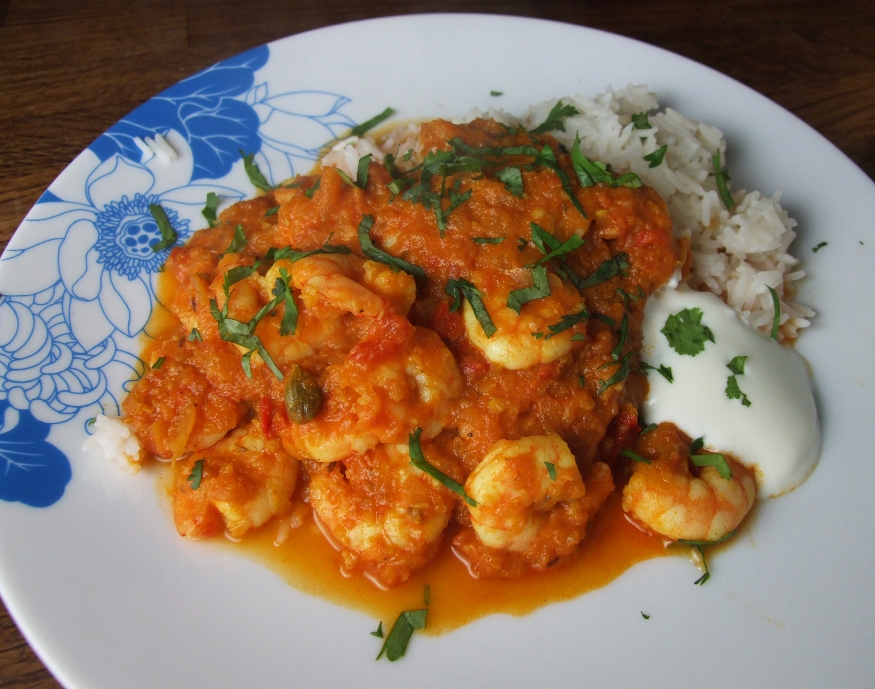
This is adapted from a Madhur Jaffrey recipe (from her classic ‘Madhur Jaffrey’s Indian Cookery’ – donated by my mum) and it’s grown with me over the years as I’ve tinkered with the ingredients; every so often I turn to the tattered old notebook, to a familiar page covered in splodges, scribbles and crispy old bits of coriander that fall out like confetti.

I love the recipe because the flavours remain very fresh and distinct and it’s quite cardamom heavy; Madhur uses 6 pods and I chuck in one of the big black smoky variety too because I’m rock’ n roll like that. I don’t even remove the cardamom pods at the end in fact, as I love the burst of flavour when you bite into one; all softened and bloated with sauce.

The final result is wonderfully fragrant, it’s fast and simple to make and you feel virtuous yet satisfied. Tick, tick and tick.

Fast and Healthy Prawn Curry

(adapted from Madhur Jaffrey’s Indian Cookery; serves 4)

1 large white onion
5 cloves garlic
1 inch cube ginger
2 red chillies
1 cinnamon stick
6 regular cardamom pods
1 large black cardamom pod
2 bay leaves
2 teaspoons cumin seeds
1/2 teaspoon coriander seeds
1/2 teaspoon turmeric
1 teaspoon cayenne pepper
5 tablespoons natural yoghurt
1 tin chopped tomatoes
A pinch of sugar
450g large prawns (raw or cooked is up to you)
Vegetable or groundnut oil

Fresh coriander
1/4 teaspoon garam masala

Put the onion, garlic, ginger and chillies in a blender with 3 tablespoons of water and blend to a paste. Put the coriander and cumin seeds in a dry pan on a low heat and heat them, moving them around, until they start to smell fragrant. Tip them into a pestle and mortar or spice grinder and grind to a paste (you can use ready ground if you like but the results will not be as delicious).

Heat 2 tablespoons of oil in a pan and add the cinnamon stick, bay leaves and cardamom pods. Stir for about 30 seconds and add the paste from the blender. Cook, stirring often for about 5 minutes, until the liquid has cooked off. Add the cumin and coriander and cook, stirring, for 30 seconds or so. Add the chopped tomatoes. Stir and keep cooking until you have a reddish-brown paste. This takes a while – around 10-15 minutes.

Take the pan off the heat and add the yoghurt, 1 tablespoon at a time until it is all incorporated. Add the turmeric, cayenne and sugar along with half a pint of water. Bring to the boil then simmer vigorously until thickened. Taste, then season with salt and pepper. Add the prawns – if you are using raw prawns, cook until they have turned completely pink. If using pre-cooked prawns, add them for a few minutes only, just to warm through.

Stir in the garam masala then serve, sprinkled with fresh coriander.

Aubergine and Lamb Pide

I’ve got a new oven. This is brilliant for 2 reasons. Firstly, it’s all clean and shiny; I mean, how often does your oven look clean and shiny on the inside? Not very often I think you’ll find. Not if you’re a slovenly layabout like me anyway. Second, my old oven was, quite frankly, a piece of shit. It had no numbers on the temperature dial and no symbols for the oven settings and it cooked unevenly so that everything had to be turned around halfway through or it would burn on one side – not exactly ideal.

So, I cooked pide in my swanky new oven; I made nice, evenly cooked pide and I knew exactly what temperature I was cooking them at by means of the lovely little digital display (imagine my panic when I saw the temp dial had no numbers around the outside). That’s 15 minutes at 220C, in case you’re wondering.

Pide are rather similar to lahmacun* and are apparently sold on every street corner in their homeland. I topped mine with aubergine (which I blackened on the gas hob before scooping out the smoky flesh); lamb, minced; spices like coriander, cumin and cinnamon; onion, garlic and a little tomato. At one point I was feeling particularly rock and roll and recklessly squeezed in some incredible  Le Phare du Cap Bon harissa (from The Good Fork – they have some great stuff, like sardine spread, which is impossible to stop eating). Very spicy indeed. You could also use the fiery red pepper paste found in Middle Eastern shops or failing that just a decent amount of chopped red chilli.

I garnished the finished pide with diced Persian pickles (dill pickles would make a nice substitute), a sprinkle of lemon juice and some parsley. These things are essential for distracting from the richness of the lamb. The dough is a piece of piddle too. Well, it is if you have an electric mixer, anyway. It was thin, yet soft – extremely easy to demolish.

The end result is a bit like a banana shaped pizza. A delicious, meat-smeared boat of soft, spicy flatbread. Very evenly cooked.

*If you like the look of this, you’ll probably also like the look of my similar, Peckham Pizza.

Smoky Aubergine and Lamb Pide

(makes 4)

For the topping:

1 large-ish aubergine
250g minced lamb
1/2 onion, finely chopped
1/2 teaspoon coriander seeds
1/2 teaspoon cumin seeds
Pinch ground cinnamon
1 clove garlic, crushed
2 tomatoes
A squeeze of tomato puree
2 red chillies (or a squeeze of very good quality, hot harissa)

To garnish:

Chopped pickled cucumbers, chopped parsley and lemon juice

Place the aubergine on the ring of a gas hob on a low heat (or under the grill), turning often, until completely blackened and collapsed. I think the hob gets a more smoky flavour but it sure as hell makes a mess. Once cool enough, scrape out the flesh, taking care to avoid any pieces of black skin. Finely chop the flesh. Set aside and discard the skins.

Skin the tomatoes by scoring a cross in the bottom and covering with boiling water for a couple of minutes. Drain, peel away the skin and chop finely. Toast the cumin and coriander seeds in a dry pan over a low heat, moving them around; when they start to smell fragrant, tip them into a pestle and mortar or spice grinder and grind to a powder.

Sauté the onions in a little oil and when soft, add the chilli and garlic and continue cooking for 30 seconds or so, stirring. Add the spices and stir again for another 30 seconds. Add the lamb and cook, breaking up the meat with a spoon, until it is all brown and cooked through. Add the tomatoes and aubergine flesh and cook for about 10-15 minutes, until any excess liquid has cooked out. Taste and season with salt and pepper. The topping is now ready so allow it to cool.

For the dough:

For the dough I used a recipe I found online which I now can’t locate for the life of me. If it’s your recipe, I’m sorry! I’ll reproduce it here anyway.

1 x 7g sachet fast action dried yeast
1 teaspoon sugar
150ml warm water
300g plain flour
1 teaspoon salt
2.5 tablespoons olive oil + more for brushing

Mix the yeast and sugar with the warm water. You want warm water, not hot, as it will kill the yeast. Leave it to one side to activate. When it’s ready (in about 5 minutes), it should be very frothy on top. If not, your water wasn’t warm enough or it was too hot – start again.

Sift the flour and salt into the bowl of an electric mixer or large mixing bowl. Add the yeast mixture and oil. If using a mixer, set it on low speed for 10 minutes until you have a smooth, elastic dough. If mixing my hand, you’re going to have to knead it until you have the same result.

Put the dough in a lightly oiled bowl and cover with a damp tea towel. Let it rise for about half an hour, or until doubled in size. Knock back the dough then cut into 4 pieces. Roll each piece out into a rectangle with tapered ends (much easier than it sounds – they don’t need to be neat at all).

Preheat the oven to 220C

Put each rectangle onto a baking tray lined with baking paper and then smear the topping over each, spreading it evenly. Fold up the sides of each pide and crimp at the ends. Brush the edges with olive oil and bake for 15 minutes. Brush the crust with olive oil once more when cooked. Sprinkle with the garnish and serve.

Baccala

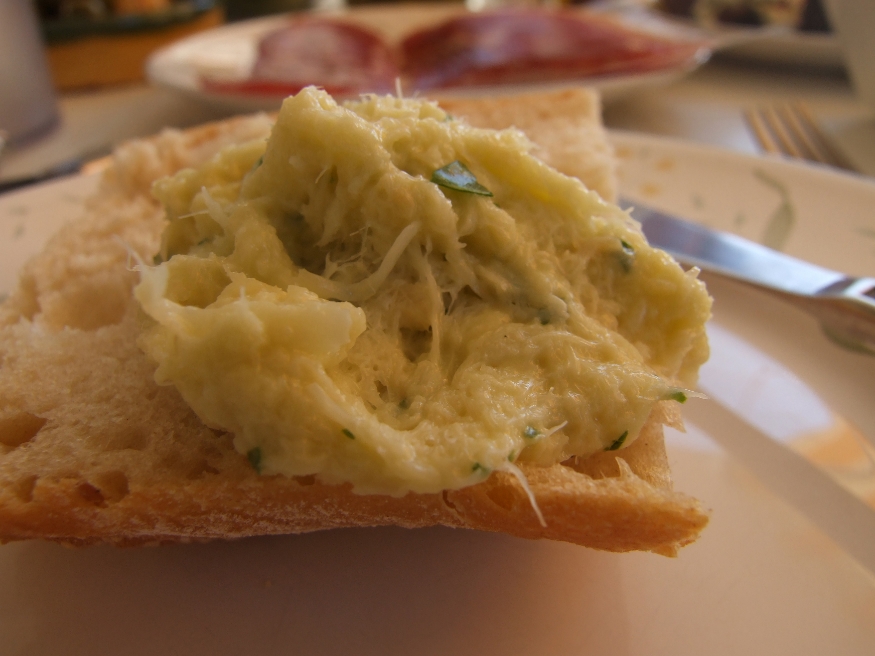
My friend Lizzie and I recently went to check out the new menu at Polpetto and fell head over heels for a blob of salt cod whippy fun called Baccalà Mantecato. The cod had been transformed into a very light, mousse-like paste and we enjoyed trying and failing to guess how it had been made. The revelation was that it had been beaten with oil, in the same way as one would make mayonnaise. “It’s very labour intensive” we were warned but on holiday in Spain with so much salt cod at our fingertips we just couldn’t resist having a go.

We bought pre-prepped fish to skip the soaking/water-changing faff part then pounded it up in a pestle and mortar with garlic and parsley. Oil was added in a steady stream while the other person emulsified furiously then, when we had a good thick mixture, a couple of tablespoons of milk was used to loosen.

It was a lot more rugged than the Polpetto version but the taste was definitely there; smeared on bread it was the perfect sunshine snack.

Baccalà Mantecato

250gr salt cod, rehydrated. I think this involves a lot of soaking and changing of water over several days – we bought ours already soaked.
A pinch of salt – the salt cod once soaked isn’t super salty
1 fat clove of garlic
A handful of parsley
2 tbsp milk
A squeeze of lemon juice

Oil, for emulsifying (we used vegetable as that’s what we had to hand; groundnut would also work but don’t, whatever you do, use extra virgin olive oil as it will overwhelm the cod)

Simmer the cod in water for 5 minutes, then leave to cool. While warm, break into pieces as small as possible.

In a mortar and pestle, pound the garlic and parsley into a paste. Add the cod and mix vigorously. Roll back your sleeves and get pounding and smooshing as someone else dribbles the oil in, until you get a thick, smooth paste. It needs quite a bit of oil. Add just a squeeze of lemon juice, then loosen with the milk – add on tbsp at a time until it is incorporated – if you feel it’s necessary. Serve with toasted bread.